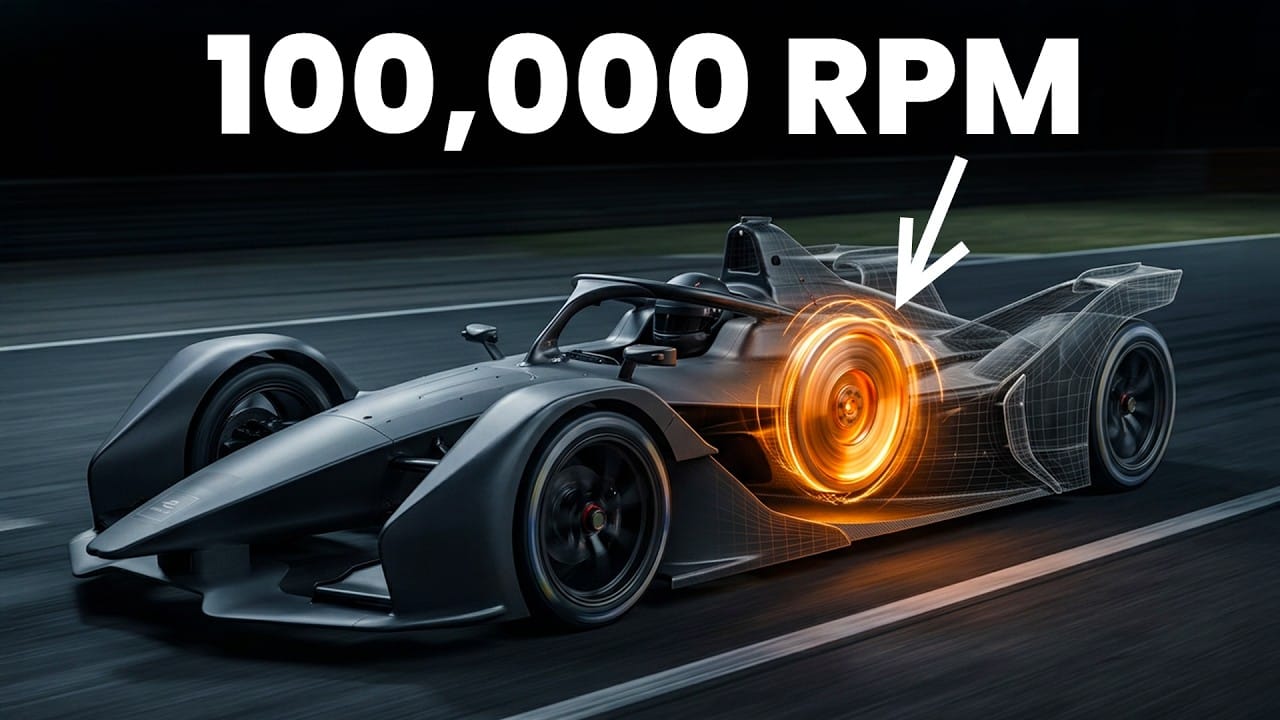
How Nissan’s Twin-Motor Flywheel Exploited a Formula E Loophole — And Got Banned
In 2019, rival race engineers were analysing onboard audio from a competitor’s car — standard practice in motorsport — when they picked up something strange. The car was producing two distinct frequencies, not one.
That alone was odd for a single-motor electric race car. But even stranger, one of the frequencies was running backwards. When the car slowed down, the frequency sped up. When it accelerated, the frequency dropped.
That’s not how electric motors work. Unless someone had figured out something very clever.
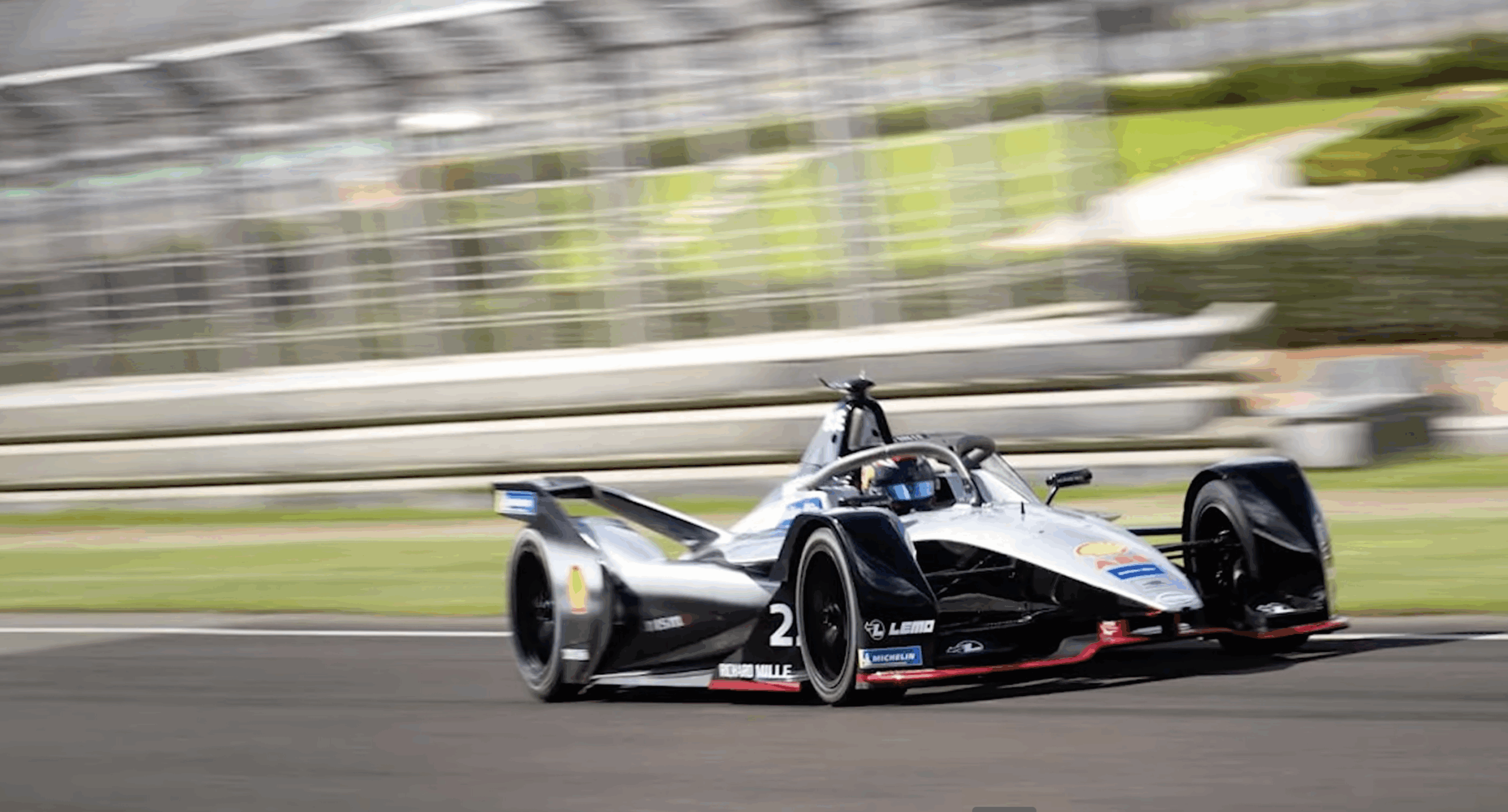
Finding Performance Where None Should Exist
The story starts in 2017, when Dr Chris Vagg, lead engineer on Nissan’s Formula E project, was given a simple brief: find performance. But he wasn’t chasing a tenth of a second. He wanted a full second per lap — a target so ambitious it essentially meant designing a different car.

Chris went back to first principles. In Formula E, both energy and power are capped by the regulations. You get a fixed amount of energy from the battery for the race, and a maximum power output at any given moment. Breaking either limit isn’t an option. So the question became: how do you deliver more power to the wheels without taking more energy from the battery?
The answer was to store energy somewhere else entirely.
The team explored every conceivable form of energy storage — potential energy (raising a mass), chemical storage (which is just a battery, and capped by the rules), and even nuclear (quickly ruled out, for obvious reasons). What they landed on was kinetic energy: storing energy in a spinning mass. A flywheel.
Flywheels are ancient technology. Potters used them in 6,000 BC. Da Vinci incorporated them into lathes. James Watt used them in steam engines. The physics is well understood. The question was whether you could package one inside a Formula E car and make it work at racing speeds.
The Loophole
Here’s where it gets clever.
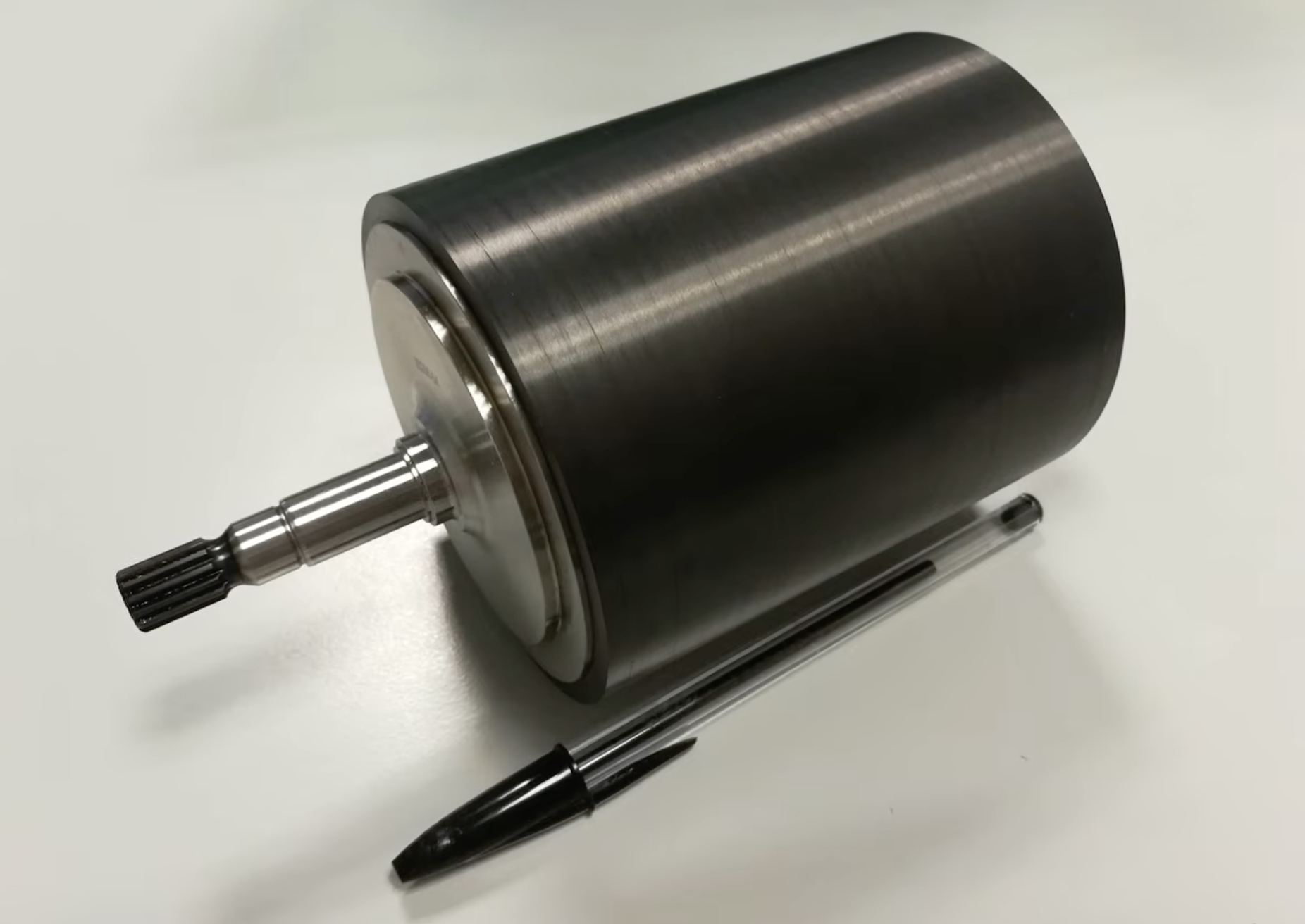
A standalone flywheel would have been illegal under the Formula E energy storage regulations. But the rules at the time permitted teams to run up to two electric motors. Most teams didn’t bother — a single efficient motor was the standard approach. But Chris realised that a motor is itself a spinning mass. Spin it fast enough and it stores kinetic energy, just like a flywheel.
The second motor wouldn’t just drive the wheels. It would double as an energy storage device.
There was a catch, though. The regulations required both motors to be connected to the drivetrain at all times — no clutching one off to spin freely. The solution was an epicyclic gearbox, essentially the opposite of a differential. With two inputs and one output, the system allowed both motors to spin at different speeds while remaining mechanically linked. Speed one up, slow the other down, and the output to the wheels stays smooth.
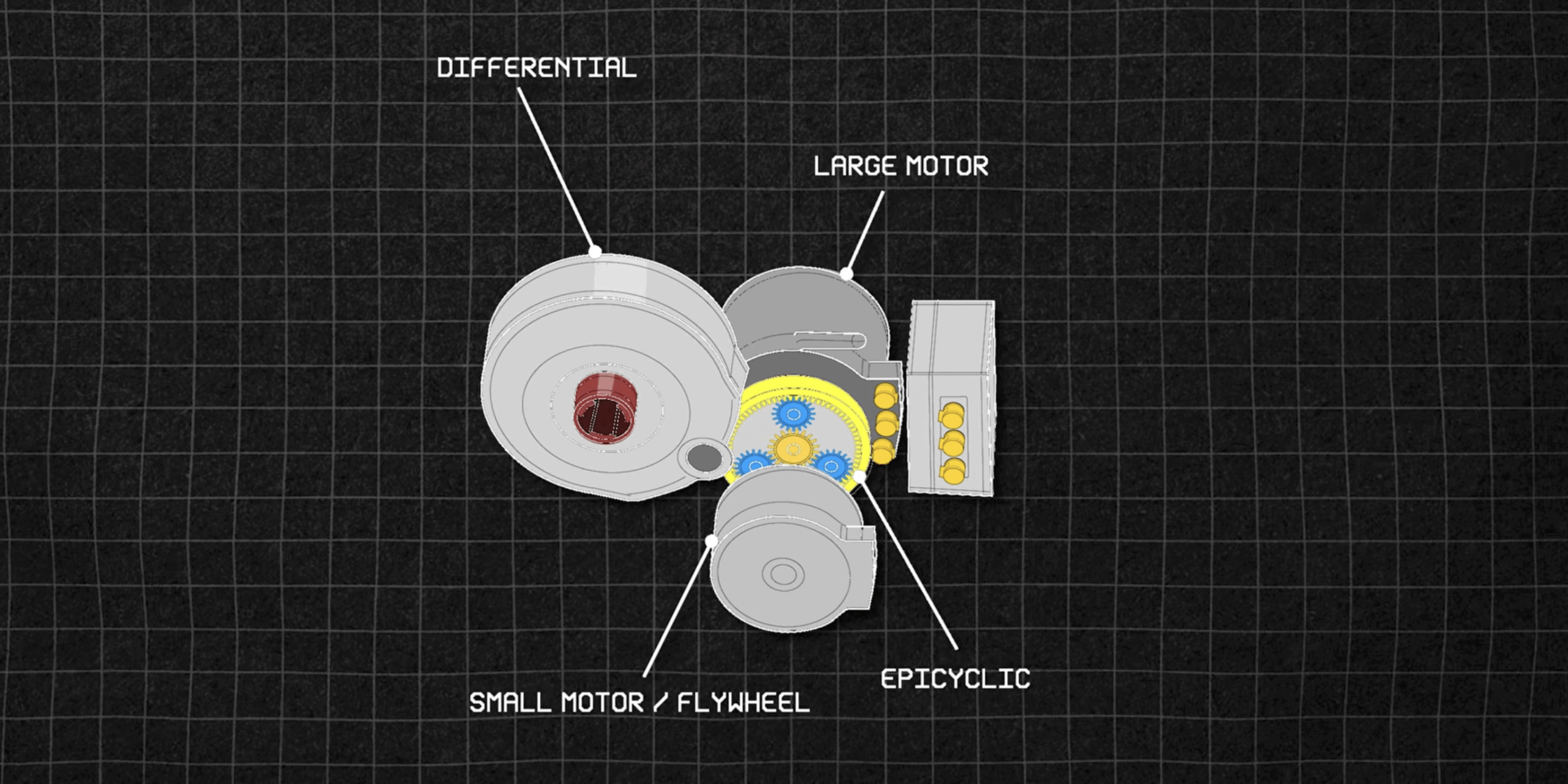
This arrangement gave the team three simultaneous advantages. First, it could store excess braking energy beyond the 250kW regenerative braking cap — energy that every other team was throwing away as heat through their mechanical brakes. Second, it could deploy that stored kinetic energy on corner exit for a burst of extra power. And third, the variable speed relationship between the two motors acted as a continuously variable transmission (CVT), keeping both motors operating near peak efficiency at all times.
Engineering at the Edge
Building the system was brutal. For the flywheel motor to store enough energy while remaining small and light enough for a race car, it needed to spin at 100,000 RPM. At that speed, the outer edge of the rotor was moving faster than the speed of sound.
The centrifugal forces were enormous — the rotor had to be wrapped in carbon fibre to stop it tearing itself apart. The aerodynamic drag from air alone would have burned the motor out, so the team sealed it inside a vacuum. But because the motor had to stay connected to the drivetrain, a spinning shaft had to pass through that vacuum seal at 100,000 RPM. And the epicyclic gears needed oil for lubrication, but at those speeds the oil itself generated enormous heat from churning.
Somehow, the team solved all of it and built a working prototype.
Domination and Heartbreak
Testing revealed the car’s raw pace immediately — but also its biggest weakness. When the stored flywheel energy dumped back into the drivetrain on corner exit, drivers experienced unpredictable power spikes that broke traction and destabilised the car at exactly the wrong moment. Sebastian Buemi reportedly said that in the wet, it would be impossible to drive.
The team turned to Canopy Simulations to crack the strategy puzzle. With two motors spinning at variable speeds, battery management, thermal constraints, and different track layouts to consider, the number of possible deployment strategies was essentially infinite. No human could calculate the optimal approach.
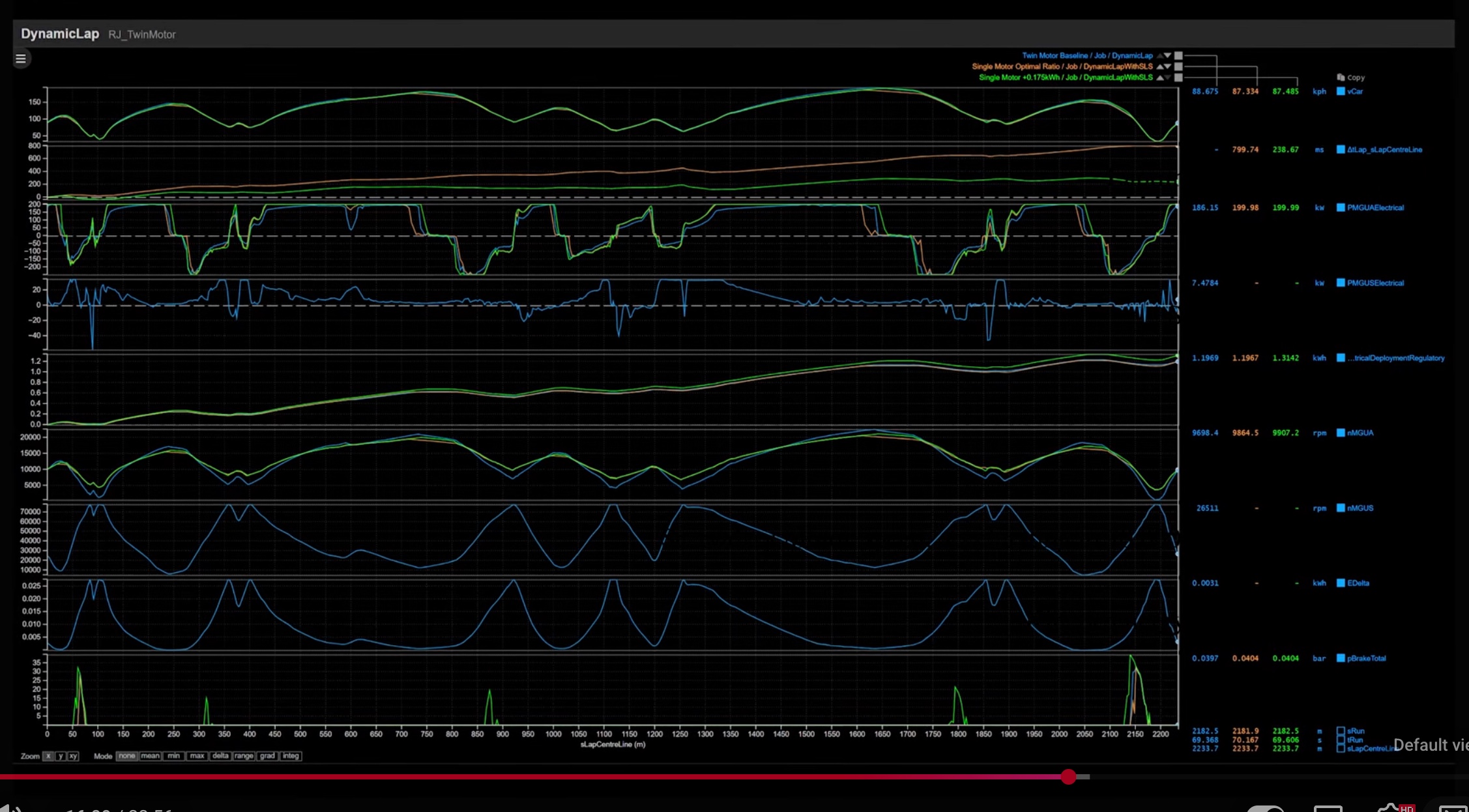
Canopy’s software modelled the full physics of the system and optimised every variable simultaneously — braking points, throttle application, energy deployment, motor speeds — across every corner of every circuit. One of its findings surprised even the engineers: rather than deploying electrical power first and topping up with flywheel energy, the optimal strategy was the opposite. Deploy the flywheel energy on corner exit first, saving battery energy for later in the straight, allowing drivers to stay flat out for longer.
In competition, the results were immediate. Nissan dominated qualifying, taking pole positions and setting fastest laps. But race day was a different story. Four consecutive double DNFs. The extra mass hurt efficiency, heat management limited how long the motor could run at full power, and drivability remained a constant battle.
But the team kept refining, and by mid-season performance in races started to match what they were showing on Saturdays. Then came the near-misses — Buemi leading in Santiago before locking up into a chicane and throwing away victory, then Oliver Rowland leading in Hong Kong before accidentally hitting the wrong button on his steering wheel.
Finally, at the penultimate round in New York, Buemi put the Nissan on pole and this time held it, going flag to flag for Nissan’s first ever Formula E win.
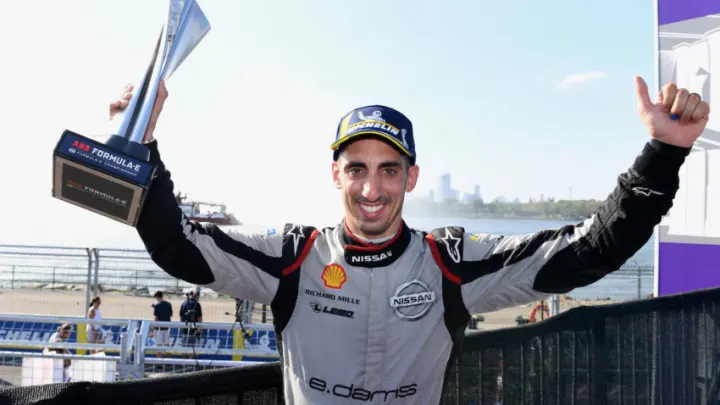
And here’s the remarkable part: the car was still only running at around three-quarters of its maximum performance capability. There were upgrades ready to go that had never been fitted to the race car.
Banned Before Its Prime
Weeks after the season ended, the FIA announced the twin-motor system would be banned from the following season. The other teams had lobbied hard, and the maths was simple — no one else could design and build a comparable system in time. Rather than let the sport become a foregone conclusion, the regulators stepped in.
The team never got to show what the car could truly do. But the story of Nissan’s twin-motor flywheel remains one of the most brilliant pieces of lateral thinking in modern motorsport engineering — a group of engineers who read between the lines of the regulations, applied 8,000-year-old physics to a cutting-edge electric race car, and produced something so fast it had to be outlawed.